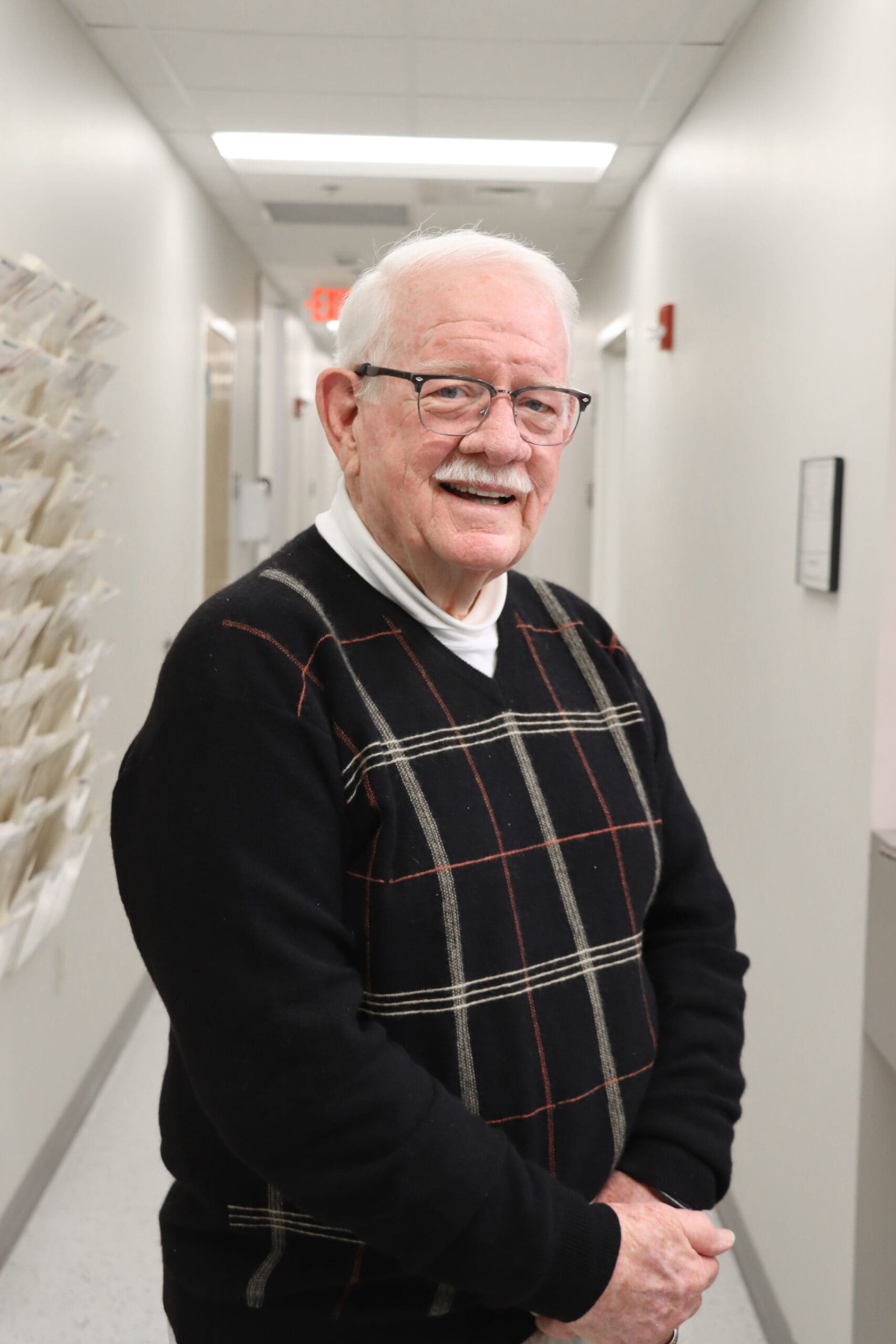
From Chronic Struggle to Renewed Life: Jack Lassiter’s Journey with Dr. Nathan Green
Posted on 01.06.24 in
“Life-changing” That’s how Jack Lassiter of Monticello describes his experience with Jefferson Regional Urologist Nathan Green, MD, and the procedure that put a sparkle back into his golden years.
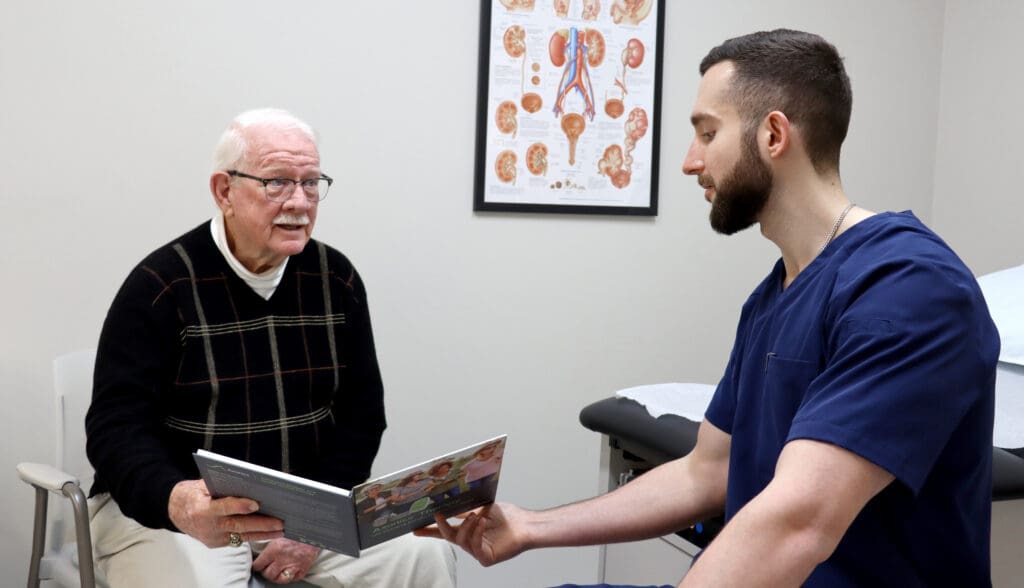 Lassiter is well known in South Arkansas, having spent ten years as Chancellor at the University of Arkansas at Monticello (UAM). He retired in 2015 in order to spend more time with his family and work on personal projects, but those goals became harder to meet as a chronic condition began to worsen. “I’m 78 years old and I’ve had urology problems my whole life,” Lassiter said. “One kidney never fully developed, so I had kidney stones, infections – you name it, I’ve had it.” Following a stroke in 2009, Lassiter’s urologic issues became more severe, resulting in fluid retention in the bladder. During one nine-month period of time, he had eight urinary tract infections, so he began going to a urology practice in Little Rock. “In 12-14 years, I saw three different doctors there because they would retire, or leave, and I would be transferred to someone else. I wasn’t happy with that, and I also wasn’t too pleased with the results of my treatment, so I decided to switch physicians.”
His initial plan was to stay with the same clinic, but then he saw a billboard in Monticello advertising Jefferson Regional Urology Associates, and their new physicians, Nathan Green, MD and Jordan Hanberry, MD. “Jefferson Regional is less than an hour from my home, so I decided to give one of the new Urologists a chance.” Not knowing either doctor, Lassiter just picked one – Nathan Green – and made an appointment. “From that very first visit, Dr. Green gave me more time, more explanation of what was going on and what the potential treatments were than anyone else had.” After a complete exam, Dr. Green told Lassiter that he believed the bladder walls were not contracting enough to clear all the fluid out, and suggested he consider a procedure called Sacral Neuromodulation.
“They basically put two electrodes through the sacrum and attach them to nerve endings. An electrical charge then communicates with both the bladder and the brain, indicating it’s time to empty the bladder,” Lassiter explained. “After the battery is implanted right above the buttocks, you receive a small handheld device similar to a key fob which allows you to change the level of stimulation being given. Previous doctors only prescribed antibiotics and self-catheterization, and I didn’t want to continue that permanently, so Dr. Green and I did a trial run to see if it would work.” Lassiter had a temporary procedure and tried the implant for five days. “Representatives from the device company called me a number of times that week to see if I could tell any difference,” he said, “and I could tell a difference all right: I could empty my bladder.”
After the five days were up, Dr. Green asked Lassiter if he wanted to go ahead with the permanent procedure, and if so, when. Lassiter laughed when he remembered that conversation. “I said, ‘Well, are you available this afternoon?’.” Just a few weeks later, the surgery took place, and when Lassiter returned for his three-week check-up, he felt great, saying the entire experience was “perfect.”
“I probably would have never heard of this if I had continued with the huge Little Rock practice,” he said. “In six scheduled visits there, in about a year and a half, I only saw a doctor once. They were all Physician Assistants and APRNs. I have nothing against that, but I went to the clinic to see a urologist. In just a couple of months. Dr. Green has made more progress than other physicians have in 15 years.”
“I told Dr. Green that I’ve improved 90% over where I used to be with this issue,” Lassiter continued. “I also told him that living in Monticello this long, I think I still have a respected voice in the community. The first thing I’m going to do with my friends is tell them about Dr. Green and Jefferson Regional Urology Associates.”